
Article
Lesson content
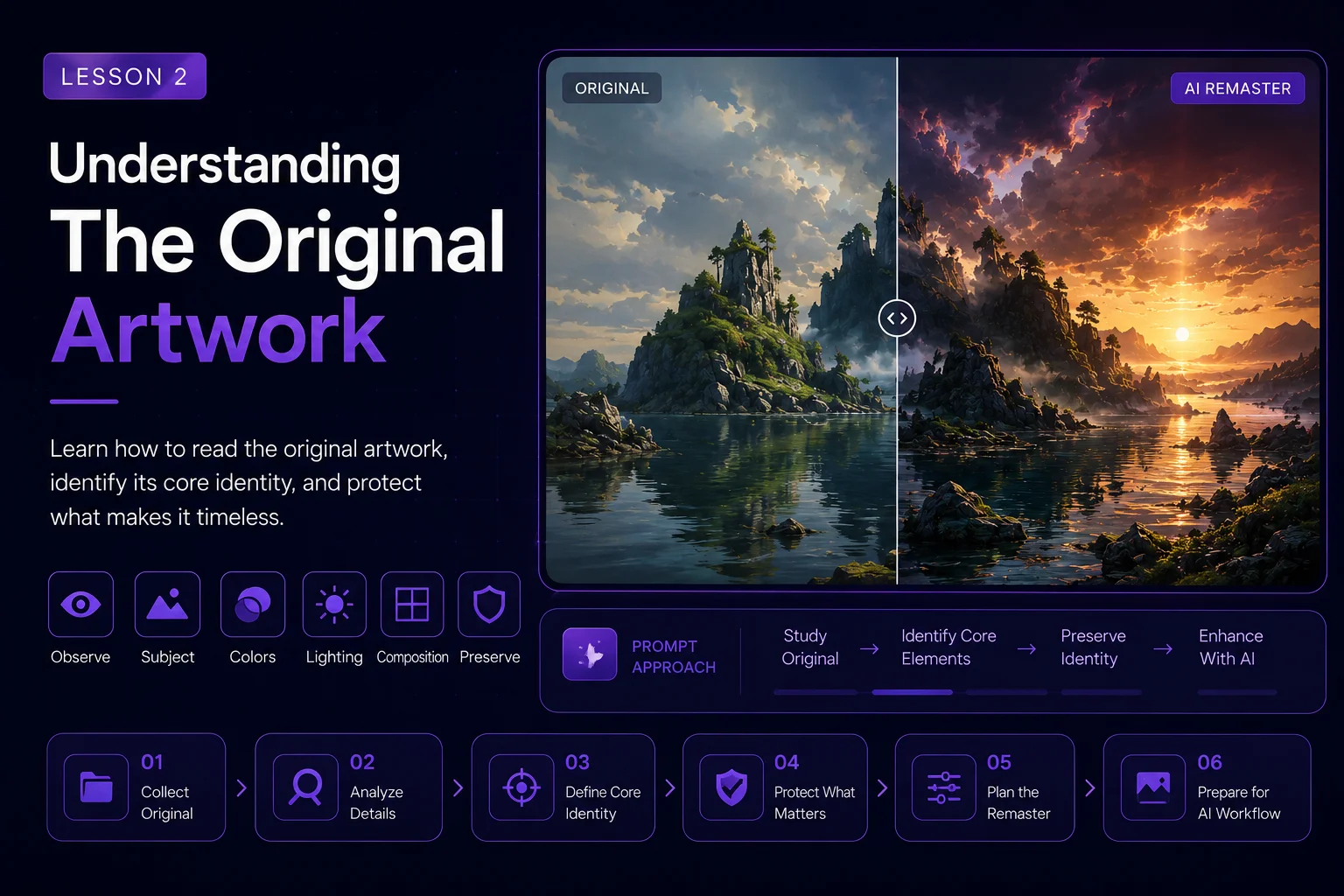
Reading the Original Dream Island Image
Before writing prompts or generating new versions, we need to study the original image carefully. AI remastering works best when we know what must stay, what can improve, and what should not be changed too early.
In this lesson, we analyze the original Dream Island artwork as a source image. The goal is not to judge it by modern standards. The goal is to understand its creative identity so the remaster can grow from the original instead of replacing it.
Why Image Reading Matters
A weak AI workflow starts with a vague instruction like:
Make this image better.
That usually creates a random result. The AI may add new objects, change the camera angle, remove the original mood, or turn the scene into something unrelated.
A stronger workflow starts with observation:
What is the main subject?
What shapes define the image?
Where is the viewer looking?
What is the mood?
Which parts feel outdated because of old tools?
Which parts are part of the artwork’s identity?
This gives us a creative map before we begin remastering.
First Impression
Dream Island is a landscape wallpaper with a mysterious, dreamlike atmosphere. The scene is built around rocky islands surrounded by reflective water, with a dramatic cloudy sky above.
The original image feels simple, but memorable. It has a strong silhouette, a low camera angle, and a surreal sky reflection that gives the scene its name and atmosphere.
The most important first impression is this:
Dream Island is not only an island scene. It is a mood piece.
The remaster should protect that mood.
Main Composition
The composition is based on a few clear visual layers.
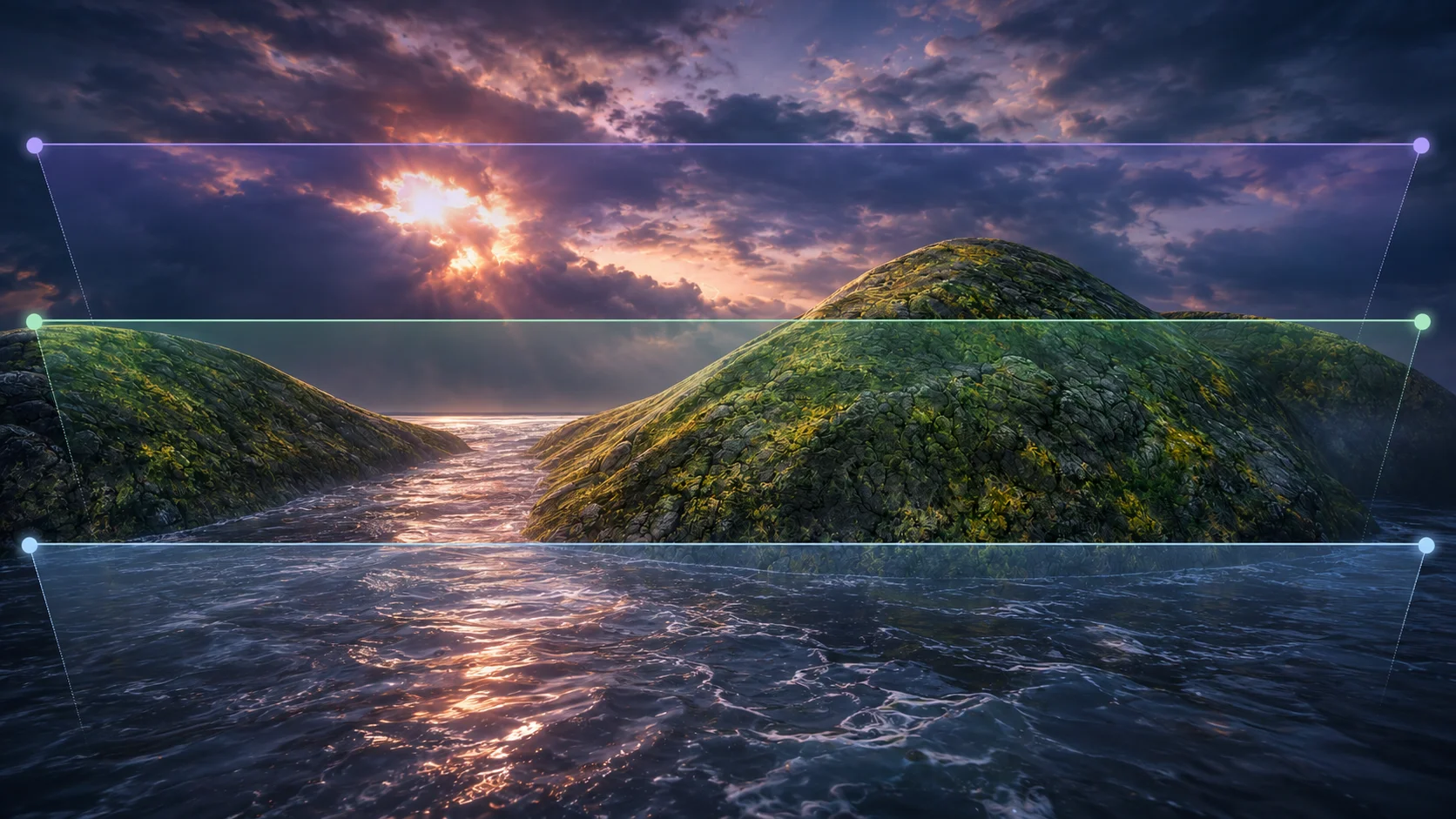
Foreground
The foreground contains reflective water. It fills the lower part of the image and creates depth by leading the viewer into the scene.
The water is important because it connects the islands and reflects the sky. In a remaster, we can improve its realism, movement, foam, and reflection detail, but we should keep it as a major visual element.
Middle Ground
The middle ground contains the main rocky island. This is the strongest subject in the scene.
It has a rounded shape, mossy green texture, and a dark shadowed side. The central island gives the image its structure. If AI changes this island too much, the image may stop feeling like Dream Island.
Background
The background contains additional island shapes, horizon water, and a large dramatic sky. The sky occupies a major part of the image and strongly influences the mood.
The clouds and bright light breaks are essential. They create mystery, scale, and a slightly surreal atmosphere.
Elements to Preserve
When remastering Dream Island, these elements should be protected:
the central rocky island
the surrounding water channel
the low landscape viewpoint
the dramatic cloudy sky
the reflective water surface
the mossy green rock texture
the mysterious dreamlike mood
the island-based composition
the feeling of open space
These are the visual DNA of the artwork.
If the AI changes all of these at once, the result may be beautiful, but it will no longer be a remaster. It will become a separate artwork.
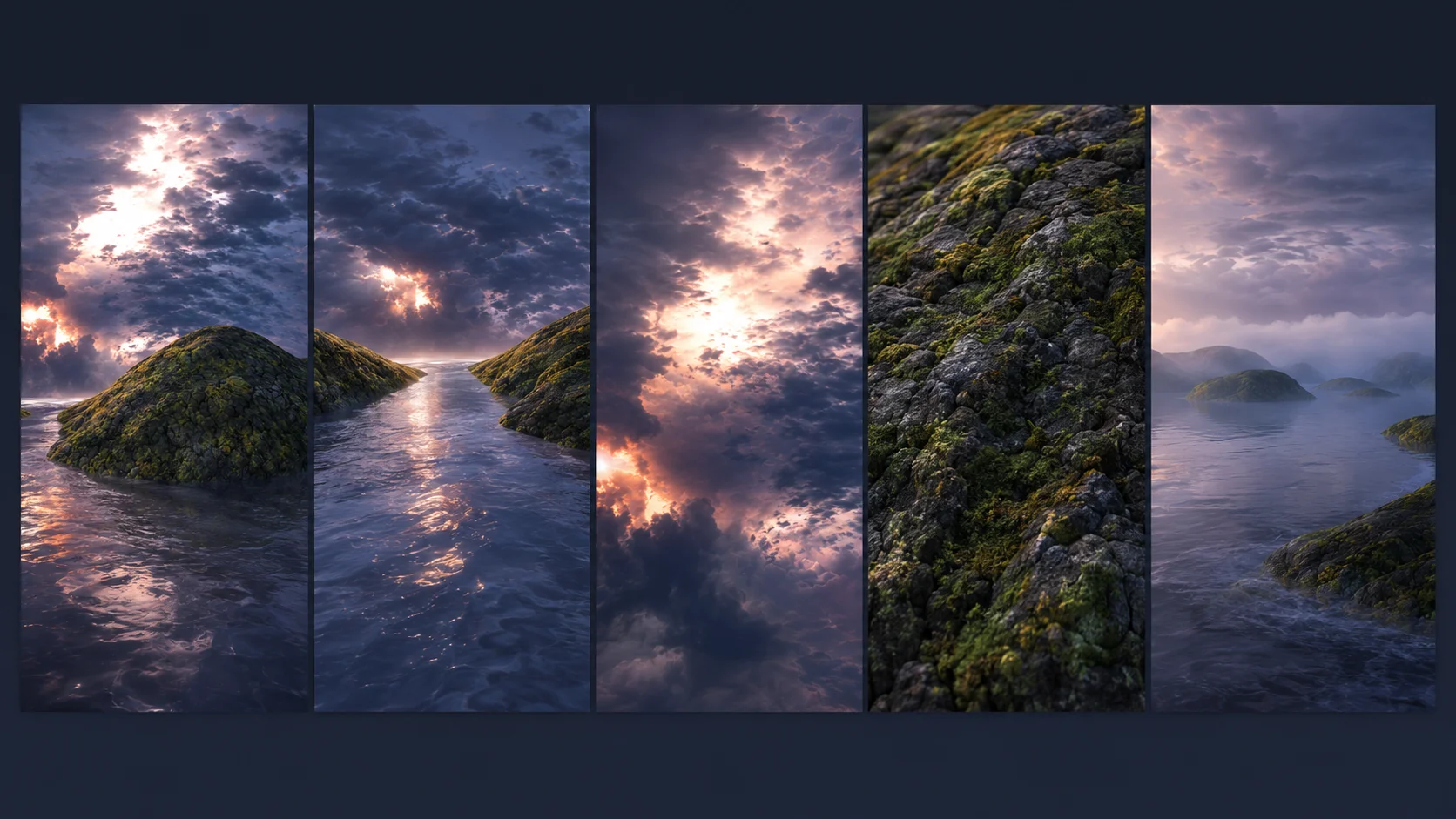
Elements That Can Improve
Some parts of the original image are clearly limited by the tools and rendering style of the early 2000s. These are good candidates for improvement.
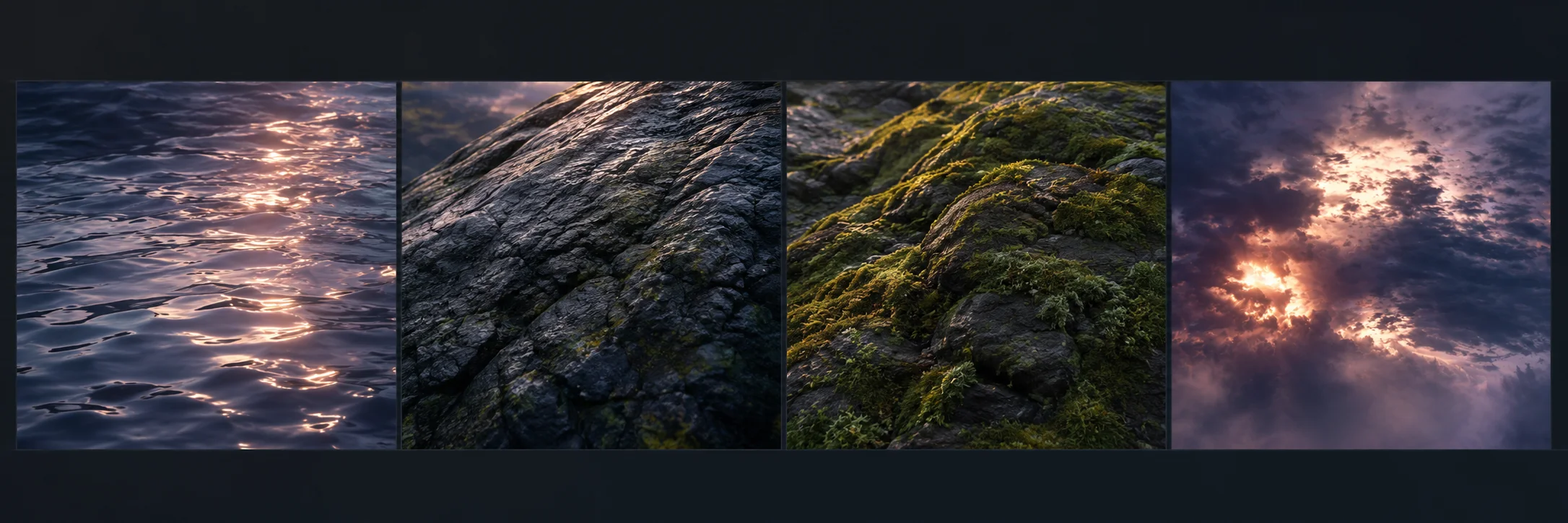
Water Detail
The water can become more natural, with better wave structure, reflections, surface variation, foam, and depth.
Rock Texture
The rocks can gain sharper cracks, wet surfaces, moss variation, and more believable material detail.
Lighting
The lighting can become more cinematic, with stronger sunset glow, softer sky diffusion, and more realistic light on the islands.
Atmosphere
Mist, haze, and distance depth can make the scene feel larger and more immersive.
Color Depth
The original has a cold blue-gray tone. The remaster can introduce warmer highlights, richer shadows, and more controlled contrast while keeping the mysterious feeling.
Elements to Avoid at the Start
In the first remaster pass, avoid adding too many new objects.
Do not immediately add:
villages
castles
boats
people
animals
meteors
fantasy buildings
heavy magical effects
Those can be explored later as creative reinterpretations. The first goal is to improve the original, not replace it.
A faithful remaster should answer this question:
What would Dream Island look like if it were rendered today with better lighting, textures, atmosphere, and resolution?
Defining the Visual Identity
A useful exercise is to describe the original image in one short visual identity statement.
For Dream Island, we can write:
A mysterious rocky island landscape surrounded by reflective water under a dramatic cloudy sky, with a dreamlike early digital art atmosphere.
This sentence becomes our creative anchor. Every prompt and every generated version should be checked against it.
If a new version no longer matches this statement, it has moved too far from the source.
Remaster Direction Notes
Based on the original image, the best first remaster direction is:
keep the island layout close to the source
improve water reflections and wave detail
add realistic wet rock and moss texture
strengthen the dramatic sky
introduce cinematic light without changing the scene too much
remove or avoid readable text in the generated image
keep the result wallpaper-friendly
This creates a controlled first improvement.
Building an Analysis Prompt
Before generating a final image prompt, it helps to write a short analysis prompt for yourself.
Example:
Analyze this image as a classic digital landscape wallpaper. Identify the main subject, composition, mood, materials, lighting, and elements that should be preserved in a faithful AI remaster.
This kind of analysis keeps the workflow structured. It helps you avoid jumping directly into random generation.
Source Image Checklist
Before moving to the next lesson, review the original image with this checklist:
What is the main subject?
Where is the strongest silhouette?
What is the dominant mood?
What colors define the image?
What material details need improvement?
What should remain unchanged?
What should be removed or cleaned?
What should only be added later as a creative reinterpretation?
For Dream Island, the answer is clear: preserve the island, water, sky, and atmosphere first. Add bigger story elements only after the faithful remaster is successful.
Lesson Takeaway
The original image is the blueprint. AI should not decide the direction alone.
By reading Dream Island carefully, we can separate the artwork’s identity from its technical limitations. The identity should be preserved. The limitations can be improved.
In the next lesson, we will prepare the 2001 render for AI so it becomes a clean and useful source for the first faithful remaster.
Lesson navigation
Continue in order
Previous lesson
AI Remaster Lab: Dream Island 2001 → 2026 · Lesson 01
Introduction: Why Remaster Old Digital Art?
Learn why AI remastering is most powerful when it respects the original artwork instead of replacing it.
Next lesson
AI Remaster Lab: Dream Island 2001 → 2026 · Lesson 03
Preparing a 2001 Render for AI
Prepare an older digital render for AI remastering by cleaning, cropping, documenting, and protecting the original source.