
Article
Lesson content
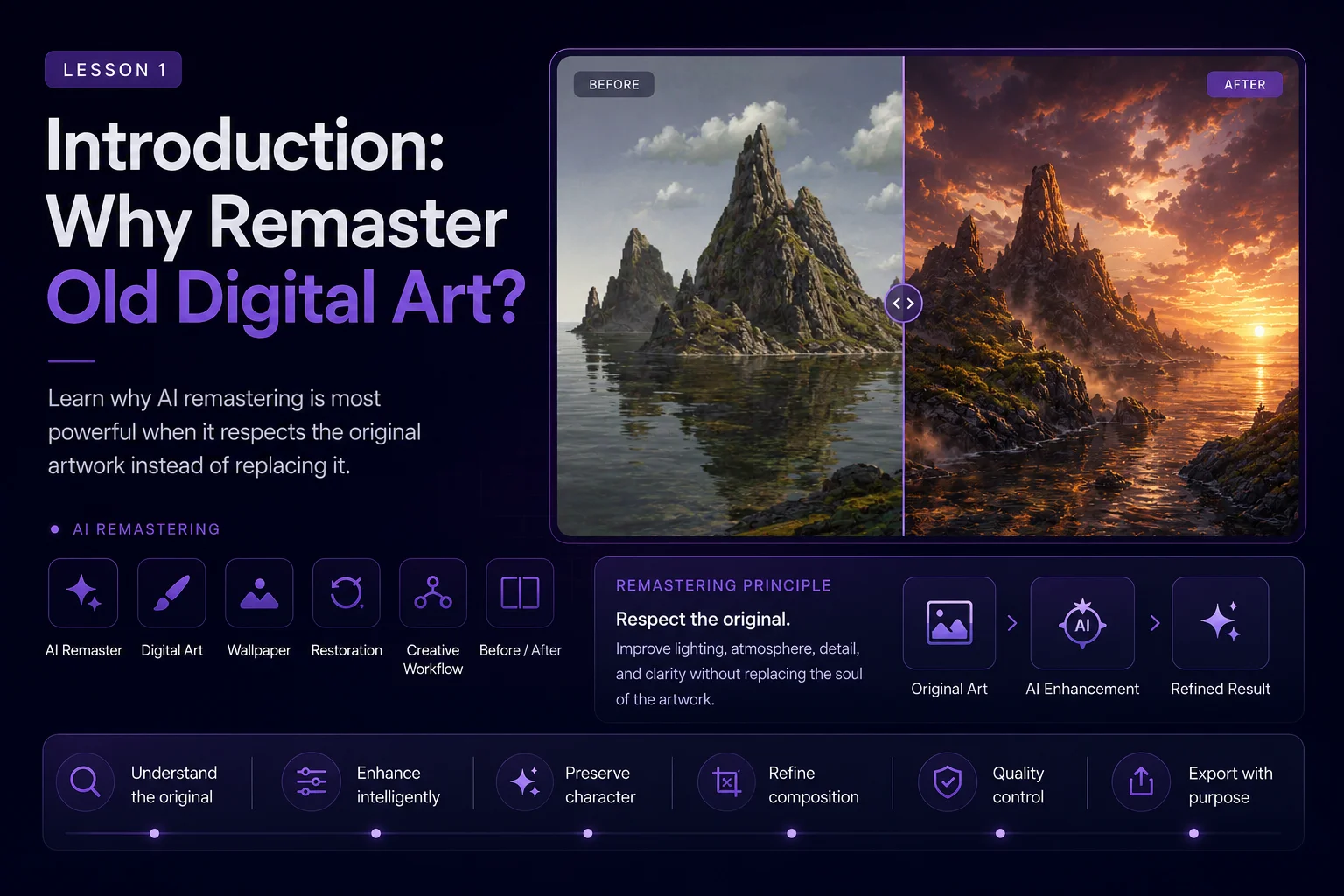
Introduction: Why Remaster Old Digital Art?
Old digital artwork has a special kind of value. It captures the tools, limitations, style, and imagination of the time when it was created. A wallpaper made in 2001 may not have the resolution, detail, lighting, or material quality expected from a modern image, but it can still contain a strong idea, memorable composition, and emotional atmosphere.
AI remastering gives us a new way to revisit those works. The goal is not to erase the original. The goal is to understand it, preserve what made it interesting, and carefully improve the parts that were limited by older tools or lower resolutions.
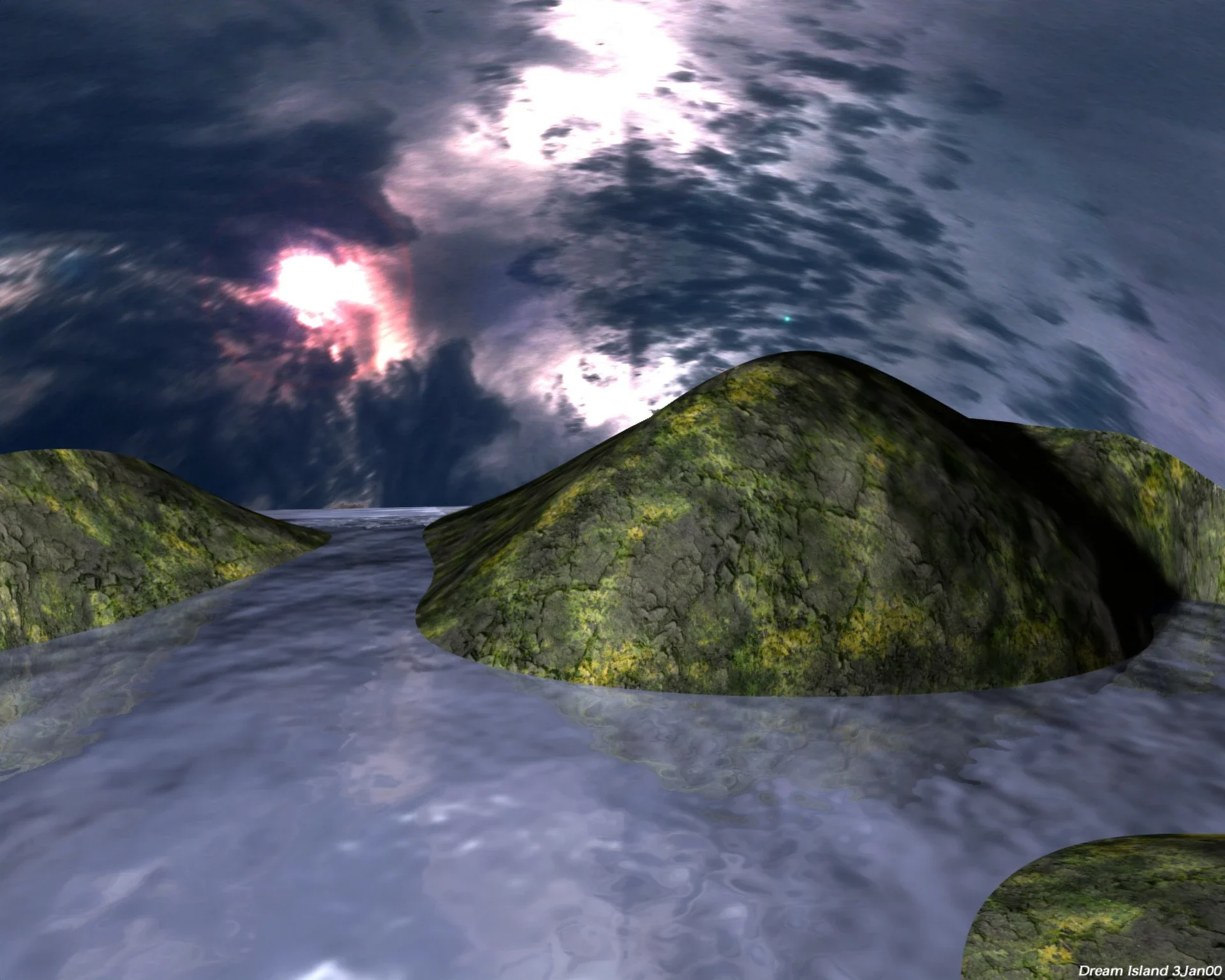
In this course, we use Dream Island as a case study: a classic Skinbase artwork from 2001 that can be rebuilt into a modern cinematic wallpaper while still keeping the spirit of the original scene.
What AI Remastering Means
AI remastering is the process of using AI tools to improve, rebuild, upscale, reinterpret, or modernize an existing image.
A good remaster can improve:
image resolution and sharpness
lighting and atmosphere
texture detail
material realism
color depth
composition clarity
wallpaper presentation
storytelling and mood
But a good remaster should also protect the original idea.
For Dream Island, that means preserving the core visual identity: rocky islands, reflective water, dramatic sky, mysterious atmosphere, and the feeling of a dreamlike landscape.
Remastering Is Not the Same as Replacing
One common mistake is asking AI to simply make an image “better.” This usually produces a result that looks impressive, but no longer feels connected to the original artwork.
A respectful remaster asks better questions:
What is the main subject?
What mood should stay the same?
Which shapes define the image?
Which details are weak because of old technology?
Which parts should be improved without changing the concept?
How far can we push the image before it becomes a new artwork?
This course will show both paths: a faithful remaster and a creative reinterpretation.
The Three Levels of Improvement
When improving old digital art with AI, it helps to think in three levels.
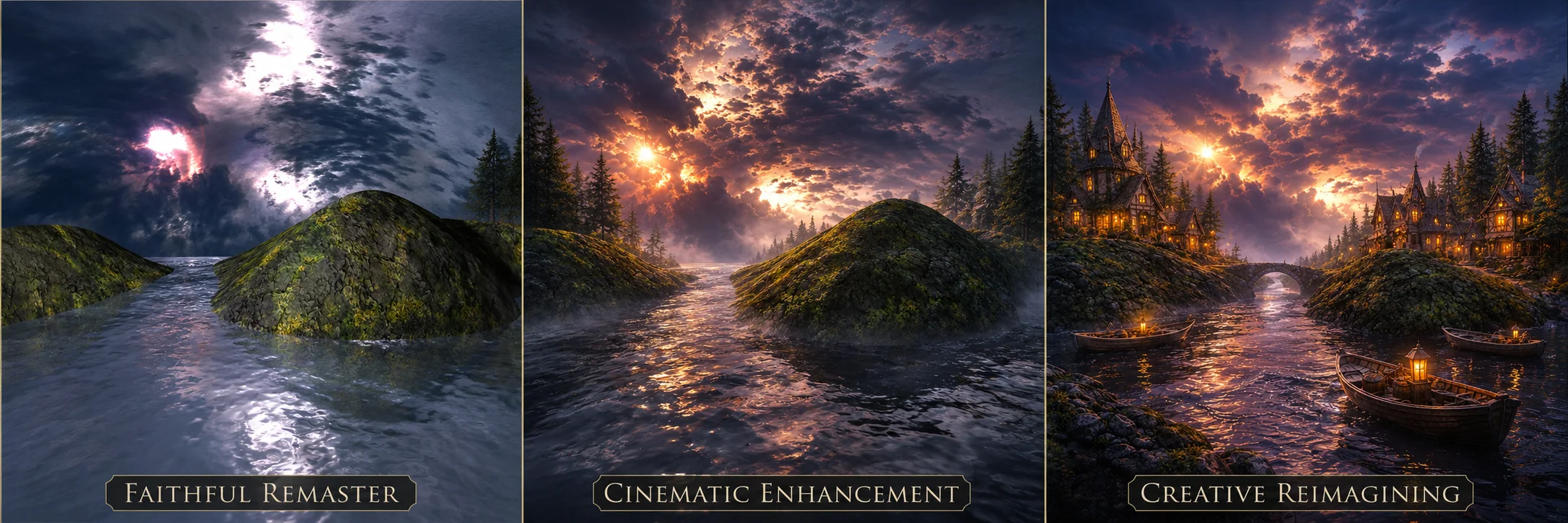
1. Faithful Remaster
This version stays close to the original image. It improves quality, lighting, water, textures, and atmosphere, but keeps the same basic scene.
This is the safest and most respectful approach.
2. Cinematic Enhancement
This version keeps the same foundation but adds more drama. The sky becomes richer, the water more reflective, the rocks more detailed, and the whole scene feels more polished.
This approach is ideal for modern wallpaper results.
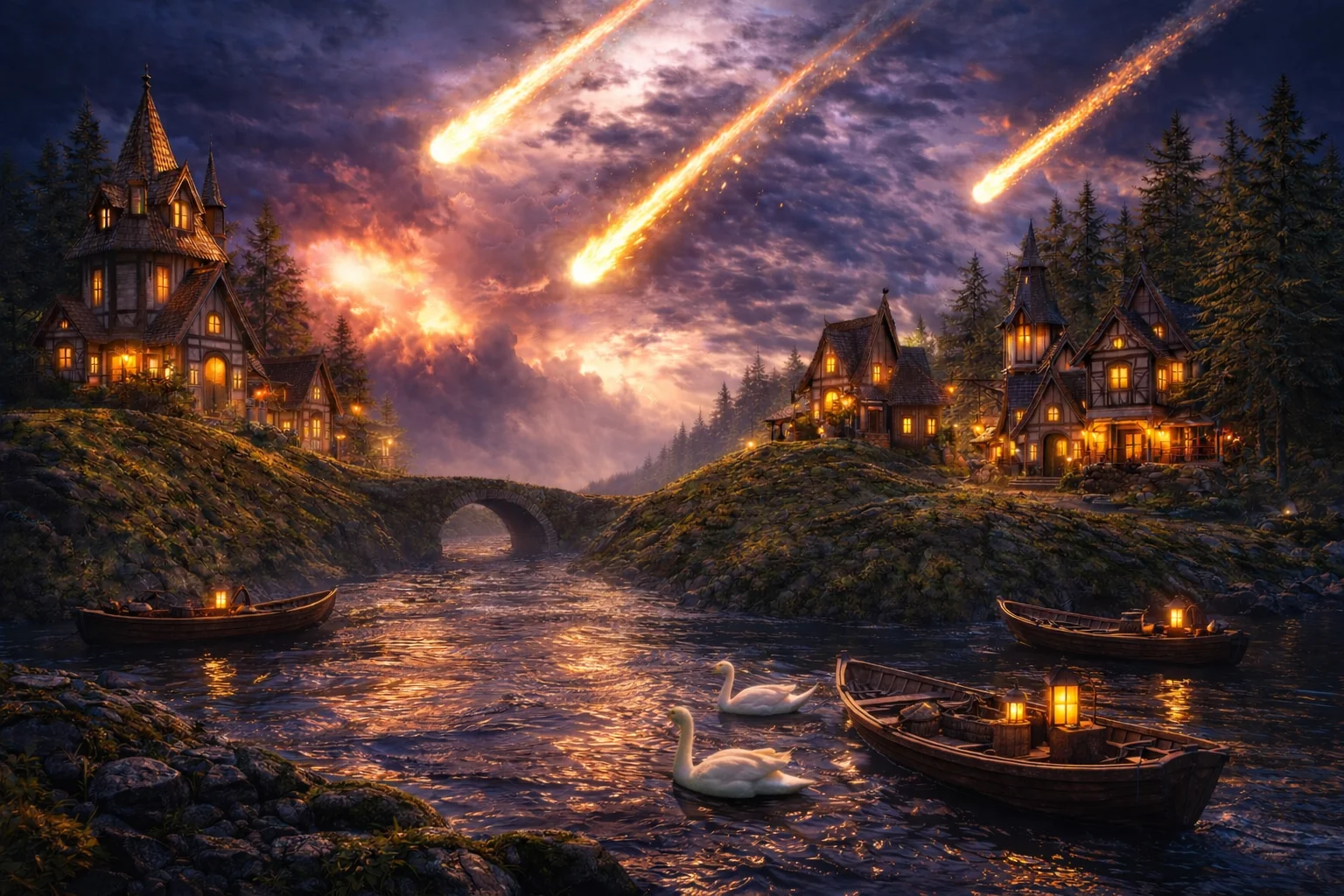
3. Creative Reimagining
This version uses the original as a foundation for a new direction. For Dream Island, that could mean adding a fantasy village, lantern-lit boats, a stone bridge, forests, or stronger storytelling elements.
This can be beautiful, but it should be clearly labeled as a reinterpretation, not a pure restoration.
Why Old Skinbase Artworks Are Perfect for This
Skinbase has a long history of wallpapers, skins, digital experiments, renders, photography, and personal creative work. Many older uploads were created with early tools, lower resolutions, and different expectations.
That makes them perfect learning material for AI remastering.
Instead of treating old images as outdated, we can treat them as source material with history. The AI workflow becomes a bridge between the original creator’s idea and modern visual possibilities.
A strong remaster can help old artwork feel alive again while still honoring where it came from.
What We Will Build in This Course
During this course, we will move step by step from the original Dream Island image toward a polished modern wallpaper.
The workflow will include:
analyzing the original image
preparing the source image for AI
writing a faithful remaster prompt
improving water, rocks, moss, and sky
adding atmosphere and depth
expanding the scene with natural environment details
exploring a fantasy reinterpretation
comparing multiple versions
choosing the strongest final result
preparing the image for a Skinbase upload
By the end, you should understand how to guide AI with intention instead of relying on random results.
The Most Important Rule
The most important rule of AI remastering is simple:
Preserve the soul before improving the surface.
If the final image looks technically better but loses the feeling of the original, the remaster has gone too far. If the final image improves clarity, detail, mood, and presentation while still feeling connected to the source, the remaster is successful.
Ethical Remastering
AI remastering should be done with care. Before improving an old artwork, always consider ownership, permission, and credit.
For your own artwork, you are free to experiment. For artwork created by someone else, you should have permission or use it only for private study. If you publish a remaster, clearly credit the original artist and explain that the new version is AI-assisted.
A good description should be honest. For example:
AI-assisted remaster based on the original 2001 artwork. The composition and concept were preserved, while lighting, detail, atmosphere, and final wallpaper presentation were rebuilt with modern AI tools.
This transparency helps viewers understand the creative process.
Lesson Takeaway
AI remastering is not about hiding the past. It is about creating a conversation between the original artwork and modern tools.
In the next lesson, we will study the original Dream Island image and identify exactly what should be preserved before we begin improving it.
Lesson navigation