
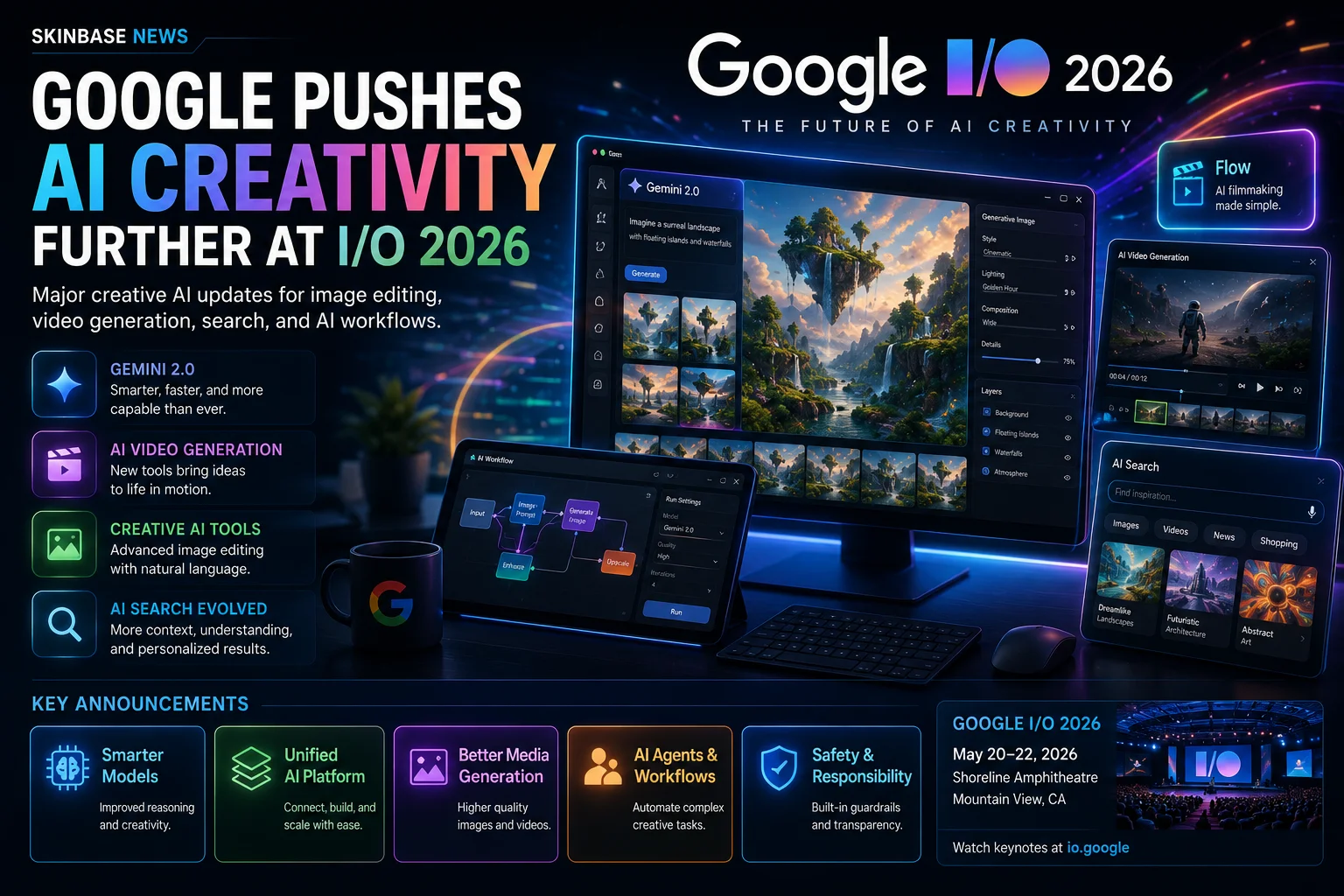
Google I/O 2026 introduced a new wave of AI updates for creators, including tools for image editing, video generation, search, agents, and content transparency.
Google I/O 2026 was heavily focused on artificial intelligence, but for creators the most interesting announcements were not only about smarter chatbots. Google presented a broader creative direction: AI tools that can help users generate video, edit images, build workflows, search more naturally, and better understand how digital media was created.
One of the biggest creative announcements was Gemini Omni, a new model family designed to create output from different kinds of input. Google is starting with video, positioning Gemini Omni Flash as a model for video generation, multimodal editing, and more natural creative iteration. For artists, filmmakers, social video creators, and digital storytellers, this points toward a future where AI tools may become less like simple prompt boxes and more like creative production assistants.
Google Flow also received major updates. Originally introduced as an AI filmmaking tool, Flow is now expanding into a broader creative studio with video, image, music, agents, and custom tools. The new Flow Agent can help with brainstorming, editing, planning scenes, creating variations, and organizing creative assets. Google also introduced Flow Tools, allowing users to create custom creative workflows using natural language instead of traditional coding.
Another important announcement for visual creators is Google Pics, a new AI image creation and editing tool built around more precise creative control. Rather than treating an image as one flat result, Google says Pics can work with individual elements inside an image. This could make it easier to move objects, resize them, change details, edit text, translate text, or adjust parts of a design without starting over from the beginning.
For everyday creators, this is an important shift. Many AI image tools are powerful, but small corrections can still be frustrating. A tool that supports more controlled editing could be useful for social posts, concept art, thumbnails, wallpapers, flyers, digital illustrations, and creative experiments.
Google also announced major AI updates to Search. The company described this as one of the biggest changes to the search box in more than 25 years, with more AI-powered answers, agents, and richer discovery experiences. For creators and publishers, this is worth watching carefully because AI search may influence how people discover artwork, tutorials, galleries, creative tools, and original content online.
Another key part of Google’s I/O 2026 story is content transparency. As AI-generated images, videos, and audio become more realistic, Google is expanding tools such as SynthID and C2PA Content Credentials to help users understand whether content was created or edited with AI. This matters for photographers, digital artists, journalists, platforms, and communities that want better context around media authenticity.
For the Skinbase community, Google I/O 2026 shows how quickly creative AI is becoming part of normal digital workflows. Image generation, video creation, content editing, search, and media verification are all moving closer together. The creative challenge now is not only learning how to generate images, but also how to guide, edit, organize, verify, and publish digital work responsibly.
AI will not replace creative taste, composition, mood, storytelling, or personal style. But the tools announced at Google I/O 2026 suggest that creators will have more ways to turn ideas into finished visuals, videos, and interactive projects faster than before.
Related Articles
Apple WWDC 2026 Begins June 8 with AI and Developer Tool Updates
Apple’s WWDC 2026 starts on June 8 with platform updates, AI advancements, developer tools, and sessions for the Apple ecosystem.
Windows 11 May Get a Noticeable Performance Boost for App Launches
Microsoft is reportedly testing a Windows 11 performance feature that briefly boosts CPU frequency during high-priority actions to make...
Avatar: Frontiers of Pandora Art Blast Shows Cinematic Environment Design
ArtStation’s Avatar: Frontiers of Pandora – From the Ashes Art Blast highlights Ubisoft’s cinematic environment design, darker worldbui...
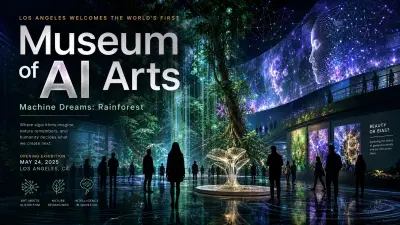
Dataland, the First Museum of AI Arts, Opens in Los Angeles This June
DATALAND, billed as the world’s first Museum of AI Arts, opens in Los Angeles this June with Machine Dreams: Rainforest, an immersive e...
Conversation
0 Comments
Keep the discussion focused on the article. Safe markdown formatting is supported for signed-in members.
No comments yet
Start the conversation if you have feedback, context, or a question about this update.